I kept asking how to get my husband to do more. The question that finally changed things was: what am I doing that keeps me responsible for everything?
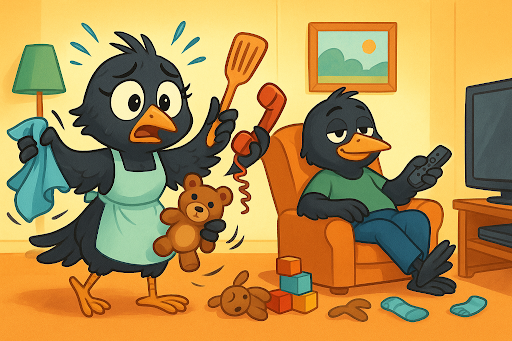
It was the weekend, the kind where the house felt like another full-time job, and it seemed like I was the only one working it.
By noon I’d already washed multiple loads of laundry, started folding everything, and put clothes away in the kids’ rooms.
I made breakfast and lunch, cleaned out the refrigerator for trash collection the next day, and even managed to clean the kitchen.
Somewhere in there, I even squeezed in fifteen minutes of reading practice with my daughter. It wasn’t long, but it mattered to me.
Meanwhile, my husband was in the living room lounging, watching football, completely relaxed.
I tried to stay calm and grounded, reminding myself:
You can’t control anyone else. Just focus on what you can do. He’s relaxing now, he’ll help later.
I wanted to believe that. And part of me did. I wanted to give him space and not make a big deal out of it. Because I knew bringing it up would just result in another argument.
But another part of me felt that familiar resentment rising, the kind that builds when you feel like you’re carrying the weight of the house alone, and the person who’s supposed to be your partner in this doesn’t even notice.
How do I get my husband to do his share of the housework?
That question was sitting in the back of my mind when I finally saw an opportunity.
He got up from the couch, helped himself to the meal I’d cooked, and then came into the bedroom, where I was still folding his clothes.
He paused and asked, “Do you have plans for the food on the table?”
I stayed calm and said, “No. Can you put the food away?”
He looked at me and replied, “Why can’t you do it?”
And in that moment, I lost it. There was no holding it together.
I was so angry, I said some really mean and hurtful things to my husband, packed my bags, booked a hotel for the night, and left.
I couldn’t be around him. My thoughts were racing: How can he not understand? How could he watch me do so much and not offer to help?
For many years, I tried explaining, asking, and even getting angry.
For a while it would help, but nothing I did lasted long term.
It felt like pumping water from a dried-up well — trying so hard to get my husband to understand everything I was doing, getting a little help for a moment, and then ending up right back where we started.
It was exhausting.
But when I finally learned how to bring out the best in him, everything shifted. It wasn’t about working harder or doing more. It was simply learning a different approach.
Support began to flow naturally, and if you’d told me two years ago that this level of teamwork and care could happen in this marriage, I never would have believed you.
In this post, I’m going to share the things I did that finally made support feel easy, natural, and consistent — without nagging, resentment, or having the same argument over and over again.
By the end, you’ll walk away with practical strategies that actually work to get your husband to do his share of the housework, not only willingly — but happily.
It’s possible.
The biggest shift was realizing I couldn’t make my husband help more by explaining harder, reminding more often, or getting increasingly frustrated. What worked was changing the pattern between us: I stopped doing everything automatically, started asking clearly for specific help, resisted the urge to remind or take over, and gave him room to follow through. And when he did, I acknowledged it instead of focusing on what still wasn’t perfect.
That’s the approach I’ll walk you through below. It doesn’t mean accepting an unfair workload or pretending you aren’t frustrated. It means getting out of the exhausting cycle where you carry everything, ask repeatedly, he gets defensive, and you eventually do it yourself anyway.

The Moment I Realized Something Had to Change
I wish I could say that was the last time I packed a bag and escaped to a hotel out of anger, but it wasn’t.
There were more nights like that. More frustration. More moments where I felt completely unsupported and overwhelmed.
Our marriage went through a lot, and if we had both been financially secure at the time, we might have divorced.
I watched friends in similar situations call it quits, and honestly, I understood why. This dynamic can slowly turn a marriage into a roommate arrangement — two people sharing a life, but not truly connecting.
I had stepped back from running my content agency to focus on our children, which meant my husband was the main breadwinner.
Our lives and our finances were intertwined in a way that made separation feel like it would just make things worse.
We had to figure it out.
And if we hadn’t needed each other during that season, I may never have discovered what actually works to create real partnership at home.
And while things aren’t perfect, the shift has been significant. I still have moments of frustration, but now they’re the exception — not the norm. I have enough examples of him showing up with care and consistency that it’s easier to extend grace on the days he’s tired or stretched thin.
Why Your Husband May Not Help Around the House
Before we get into what worked, it helps to understand one thing: what looks like laziness or indifference isn’t always that simple.
Sometimes your husband genuinely doesn’t see the invisible work you’re carrying. Sometimes you’ve fallen into a pattern where you do everything because it feels easier than asking. And sometimes repeated frustration and criticism have created a cycle where you feel unsupported, he feels like he can’t get anything right, and both of you become more resentful.
Understanding that helped me stop trying to convince my husband that he was failing and start changing the pattern between us.
That’s where the Reset & Support System begins.

How to Get Your Husband to Help More Around the House
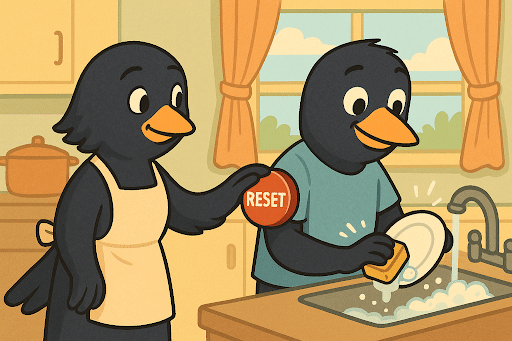
If your husband is showing signs of his shame being triggered, the first step may feel like the hardest. This is where The Reset & Support System begins — a simple framework designed to shift the dynamic from tension and resistance to partnership and support.
Before You Ask for Anything — Do This
When I was a kid, one of the best parts of breakfast wasn’t the cereal, it was digging through the box to find the little toy hidden at the bottom. I knew it was there, but it wasn’t always easy to find. Sometimes I had to search for it.
That’s what I’m asking you to do with your husband.
If he’s showing signs of being triggered or shut down, look for something — anything — you can genuinely appreciate. Then tell him. It doesn’t matter how small it is; what matters is that it’s real.
I remember sharing with my therapist that my husband had done something I appreciated, and he asked if I’d told him. I laughed and said, “Why would I do that?” In my mind, appreciating what he did would only make things worse. He’d think everything was fine and stop trying.
He gently said, “Well, you share the things you don’t like…right?”
And I said, “Oh yes, that part I’ve mastered.”
He smiled and replied, “Then it might help to share what you appreciate, too.”
I’ll be honest — even after that session, I didn’t fully grasp how important appreciation was. But once I connected it to the shame/isolation dynamic, it finally clicked why this mattered so much.
Once I began acknowledging the things he did well, even if it was small, he started showing up more.
It sounds simple, but it’s powerful. Try it and watch what happens.
Reveal What He Can’t See
The next shift was helping my husband understand what was actually happening behind the scenes.
During couples therapy, while explaining his contributions at home, he said something I’ll never forget:
“And…whatever Robyn’s doing at home.”
That’s when it hit me: he truly had no idea how much I was doing.
At first, I tried to fix that by telling him. I’d rattle off everything I accomplished while he was relaxing. I even tried writing down my tasks and texting him the list.
Neither worked.
Because underneath my words was still the message: Look at everything I do. Now you need to do your part.
Eventually, I learned to make the invisible visible without turning it into an accusation. Instead of proving how much I was doing, I simply let him into my reality.
I might tell him I was exhausted after a day of appointments or that I didn’t have the energy to cook dinner. Without the blame underneath it, he became far more likely to ask what he could do or simply step in.
That’s when I realized that showing him my workload wasn’t the problem. Trying to use my workload to prove that he was failing was.
And once I stopped keeping score, I realized the next shift had to start with me—not doing more, but actually doing less.
Stop Overfunctioning
In therapy one day, as I complained about how exhausted I was, my therapist asked me, “What can you let go of?”
My immediate response was: Nothing. If I stop doing it, it won’t get done.
He then asked, “But aren’t there some things that matter less than others?”
I couldn’t name one thing to let go of in that session, and that was the problem. I was overfunctioning, and overfunctioning leads straight to burnout.
It took a few weeks, but eventually I made a list of things I could either let go of completely or simply do less of.
Not to punish my husband, but because overfunctioning was turning me into someone I didn’t want to be.
I was snappy with my husband.
I was short with the kids.
It wasn’t serving me at all — and because I was carrying everything, it looked like I had it under control.
Which meant there wasn’t much room for my husband to help, even if he wanted to.
But once I identified things I could release; like folding his laundry, cleaning the kitchen every day, or making elaborate meals, I finally created breathing room. The resentment softened, and I found permission to rest.
And once there was space, the next part became clear.
Ask Clearly and Directly
I used to assume my husband should automatically notice what needed to be done and step in.
But if he’d never been responsible for paying attention to those things before, it wasn’t suddenly going to become instinct.
Instead of expecting him to just notice, I started asking the way I would ask a friend or colleague, someone I respect and want to maintain a good relationship with. Not with frustration underneath it or a tone that said, You should already know this, but with the assumption that he simply didn’t realize.
Keep the request specific and easy to understand. Instead of, “I need you to help more around here,” try, “Can you clean up the kitchen after dinner tonight?” or “Can you handle the kids’ baths while I finish the laundry?” A clear request gives him something concrete to respond to, rather than asking him to figure out everything you’re carrying and decide where to jump in.
And asking directly isn’t the same as nagging. Nagging is the exhausting cycle of asking, reminding, checking, and asking again. The goal here is to make a clear request once and give him room to respond.
Say It Once — Respectfully
Author Dr. Kevin Leman teaches that when you need something, the most effective way is to simply ask — once. Say it clearly, kindly, and then walk away. The hardest part is resisting the urge to repeat yourself.
And because most men don’t multitask well, timing matters. I learned to ask when he wasn’t distracted, not when he was deep in a show, mid-text, or mentally checked out.
I’ve found this approach works surprisingly well. Just this morning, I asked my husband to take out the kitchen trash before I started getting the kids ready for school because it was overflowing.
A few minutes later, I felt the urge to remind him — old habits — but I resisted. I’m not his mother, and reminding takes energy I don’t want to spend.
Five minutes later, without another word from me, he walked into the kitchen and took out the trash.
And If He Doesn’t Step Up? Let Reality Be The Teacher
This part changed everything for me. I’d never tried it before reading about it in Dr. Kevin Leman’s work — but once I did, it worked like a charm.
Instead of repeating myself, hovering, nagging, or stepping in to “just do it myself,” I learned to let reality be the teacher.
If he agreed to handle something and didn’t — the natural consequences did the teaching.
Here’s what that looks like in real life:
- Trash:
If the overflowing trash didn’t get taken out and my son tossed his food on the floor (as he often does), someone still had to clean it — but this time it wasn’t automatically me.
- Laundry:
If he didn’t move his laundry from the washer to the dryer and it soured? I didn’t rewash it. He did — when he was ready to wear it.
- Dinner Prep:
If dishes piled up and there were no clean pans to make dinner? We didn’t scramble. We ordered takeout — and he paid.
- Kid Logistics:
If he forgot to sign a school form or pack something the kids needed? The teacher didn’t email me.They reached out to him (because I made sure the school had his contact too).
This isn’t about being mean or punitive, it’s about protecting yourself from overfunctioning.
Because if you think about it, we became so capable not because someone hovered over us, but because when we dropped the ball, we felt the consequences and learned from them.
He deserves that same opportunity.
Acknowledge Effort & Build Trust
When he followed through, even if it wasn’t exactly how I would have done it, I acknowledged it.
Not because he deserved a parade for doing his share, but because genuine appreciation works a lot better in a marriage than constantly pointing out what still isn’t right.
The harder part for me was trusting him with more.
I worried, What if I let go and he drops something important?
My therapist suggested starting small. I handed over lower-stakes responsibilities where a mistake wouldn’t harm the family or create chaos. That gave me practice letting go and gave my husband room to take ownership without me monitoring him.
As he followed through, I trusted him with more.
That trust didn’t grow because I reminded him, checked behind him, or made sure he did everything my way. It grew because I gave him the opportunity to show me he could handle it.
What Won’t Get Your Husband to Help More
Many women vent to well-meaning friends who, in an attempt to help, suggest drastic solutions—go on strike, stop doing anything for him, or even threaten divorce. While these may feel empowering in the moment, they rarely work in the long run.
These approaches assume that your husband sees the situation the same way you do and is choosing to ignore his responsibilities. But that’s not always the case. Men often have an entirely different perspective on household responsibilities, and taking an extreme stance can make things worse instead of better.
- Going on strike can deepen emotional disconnect, leading to more resentment rather than real solutions.
- Threatening divorce when you don’t truly mean it can break trust instead of fostering teamwork.
- Trying to educate him with data —whether through research, long discussions, or examples from friends—often goes in one ear and out the other. I’ve tried it. It doesn’t work.
Instead, lasting change happens when you reset the dynamic and approach things differently—not forcefully.
But there’s an important difference between a husband who needs time and space to develop new habits and one who consistently refuses to participate in shared responsibilities. You can change how you communicate, stop overfunctioning, and create more room for partnership, but you can’t force another adult to contribute. If you’ve made clear requests and changed your side of the pattern but he continues to dismiss your needs or refuses any shared responsibility, the issue may be bigger than chores. That may be a conversation worth having together, or with the support of a couples therapist.
And if the relationship involves intimidation, threats, coercion, or abuse, this approach isn’t meant to solve that dynamic. Prioritize your safety and seek appropriate professional support.
Final Thoughts
There will be moments where you still feel frustrated or unheard, and moments where he slips back into old habits. That’s expected. Growth happens in the repetition.
I went from feeling like a single parent in a two-person household, to feeling supported, seen, and partnered. And it didn’t happen because I worked harder — it happened because I learned to approach things differently.
So give yourself time. Give him time. And give your marriage room to grow into something softer, more connected, and more shared than what you’ve been carrying alone.
Read More from Relationship Blackbook
Discover more from Relationship Blackbook
Subscribe to get the latest posts sent to your email.

Leave a Reply